
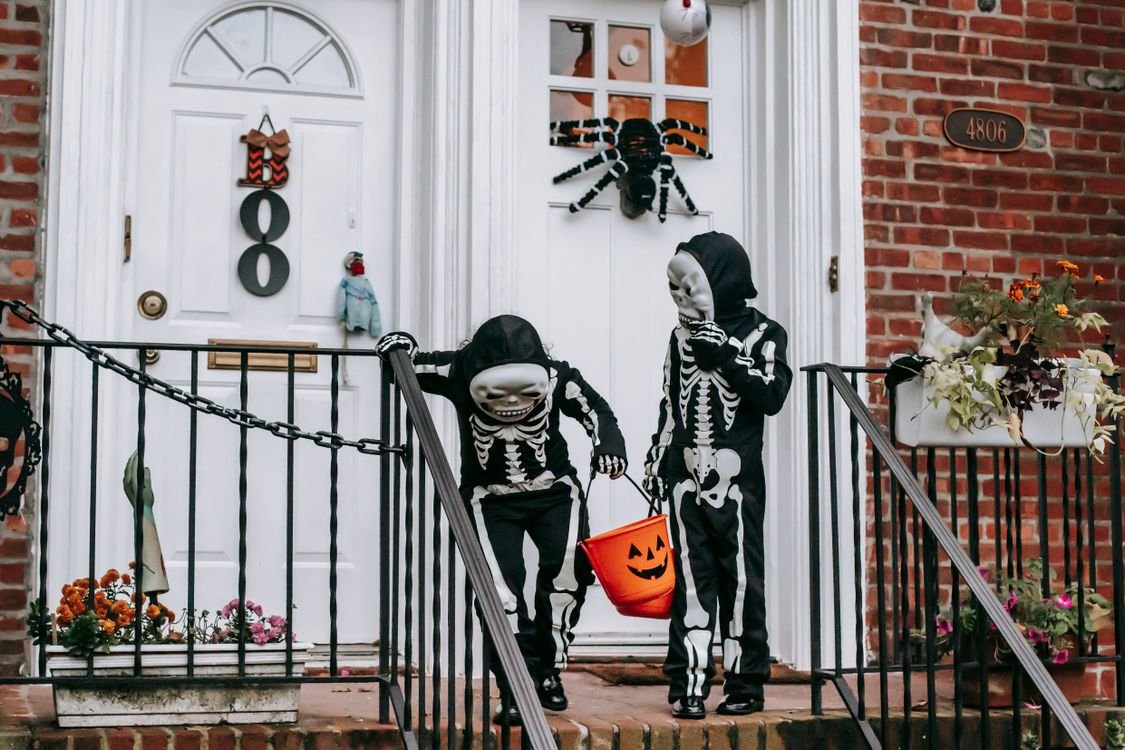
Halloween can be the best night of the year, or the hardest one. For a lot of autistic kids, the hard parts are specific: doorbells and crowds, costumes that itch or overwhelm, being expected to speak on cue at a stranger's door, and a bag full of treats they cannot eat. None of that means skipping Halloween. It just means picking the version of it that fits your kid.
This post is in two parts. First, what is happening in Edmonton and area this week. Then, two pumpkin signals that work anywhere, and why both of them matter for autistic kids.
In Edmonton: accessible trick-or-treating, starting at 4 p.m.
Treat Accessibly is the Canadian movement built on one idea: treats come to the end of the driveway, at curb level, so no one has to navigate steps, narrow paths, or a crowded porch to take part. For Halloween 2026, participating Treat Accessibly Halloween Streets begin at 4 p.m. on Saturday, October 31, which means daylight and a calmer start for kids who do better before dark.
Summerside is where Edmonton families have gathered for this before: the neighbourhood hosted a Treat Accessibly Halloween Village in 2025, and it is exactly the kind of street the movement is built for. This year's participating streets are listed through Treat Accessibly itself, so check there before you head out to confirm what is running near you.
The whole movement started with one family in 2017. Rich Padulo's six-year-old daughter Siena asked how a child using a wheelchair could reach their front door, so the family moved their treats to the driveway and made a lawn sign. Free Treat Accessibly lawn signs are available at Pet Valu stores across Canada, or printable from the Treat Accessibly site, so any home can join in.
While you are in the neighbourhood, Summerside Grande Boulevard is worth the trip on its own. It is the decorated street people call Halloween Alley, running between 88 Street SW and 70 Street SW, where dozens of homes go all out and well over a thousand costumed visitors show up on Halloween night. It is free, and you can walk it or drive it. A quieter night before Halloween works too, if the big night itself is too much.
Practice first, then the real thing
If the big night feels like a lot, Edmonton has two chances to rehearse it.
Neuro Wise Edmonton is running a Halloween How-To trick-or-treat practice on Thursday, October 29, from 4 to 7 p.m. It is free, with registration through Eventbrite, and it is built around going at your own pace: try on a costume or not, walk up to a door or just watch, say trick or treat or communicate another way. There is a sensory room on site and staff to help families navigate.
Alberta Therapy Co. in Old Strathcona is holding a sensory-friendly trick or treat on Friday, October 30, from 4 to 6 p.m. Kids visit two or three doors, with food and non-food treats to choose from, and communication supports on hand including a Halloween core board, AAC wristlets, BIGmack buttons, and a visual choice board. Costumes are welcome but not required, and every activity is an invitation, not an expectation.
And if weather or crowds rule out door to door entirely, the West Edmonton Mall Trick or Treat Festival runs indoors on Saturday, October 31, from 3 to 6 p.m., with candy stations throughout the mall. Warm, dry, and easy to leave whenever you are done.
One more planning tool: St. Albert keeps an interactive Halloween map showing participating homes offering barrier-free trick-or-treating or allergy-friendly treats, so you can plan a route that works before you leave the house.
Outside Edmonton: teal pumpkins
The Teal Pumpkin Project, run by Food Allergy Research and Education (FARE), is the simplest signal on this list. A teal pumpkin on a porch means that home has non-food treats available. That is it. Glow sticks, stickers, bubbles, bouncy balls, spider rings, that kind of thing, kept in a separate bowl from the candy so there is no cross-contact.
It started in 2013 with Becky Basalone in Tennessee, whose son has a severe food allergy. She painted a pumpkin teal, filled it with small toys, and shared the idea. FARE adopted it in 2014 and it has spread worldwide since. FARE offers free printable signs you can put up next to your door.
Two cautions worth knowing. Some non-food items still carry allergens, like certain brands of moldable clay that contain wheat, and some kids have latex allergies, so choose the trinkets with the same care you would choose the candy. And fun-size candies can have different ingredients than full-size bars, so reading every label still matters even on a good night.
Outside Edmonton: blue buckets
A blue bucket means something different, and it is easy to mix the two up. A child carrying a blue bucket may be autistic. They may not say trick or treat or thank you. They may not make eye contact, or tolerate a mask, or look the way you expect a trick-or-treater to look. The bucket is a quiet way of saying that without the family having to explain it at every door.
The idea spread in 2018 from a Facebook post by Alicia Plumer about her son BJ, who was 21 and loved Halloween. It is not an official program, it is a grassroots signal, and whether to use one is each family's own call. That part matters: some autistic adults and advocates have said a coloured bucket can feel like a public label, and not every family wants one. Both views are fair. If you are handing out treats and you see a blue bucket, the whole job is patience. Share a treat, skip the pressure to perform, and let the kid enjoy the night.
You may also spot purple pumpkins, which signal epilepsy awareness. Same idea, different community, same kindness.
Why both, for autistic kids especially
A lot of autistic kids also live with treat restrictions, whether that is food allergies, texture and sensory issues around food, or feeding challenges. So the two signals cover different halves of the same night. Teal covers the treat, so a kid is not handed a bag full of things they cannot eat. Blue covers the interaction, so a kid is not expected to perform a social script to earn it. Together, they make room for a kid to just... have Halloween.
Pick the version that fits your family. A practice night on Thursday, driveway treating from 4 p.m. on Saturday, a short route before dark, a mall instead of a neighbourhood, or a quiet night at home with a movie and a bowl of safe treats. They all count. The kids who need Halloween to bend a little are not asking for a different holiday, just a door that is open to them.
0 Comments
No comments yet. Be the first!
Leave a Comment